Ways to Cultivate Student Resilience
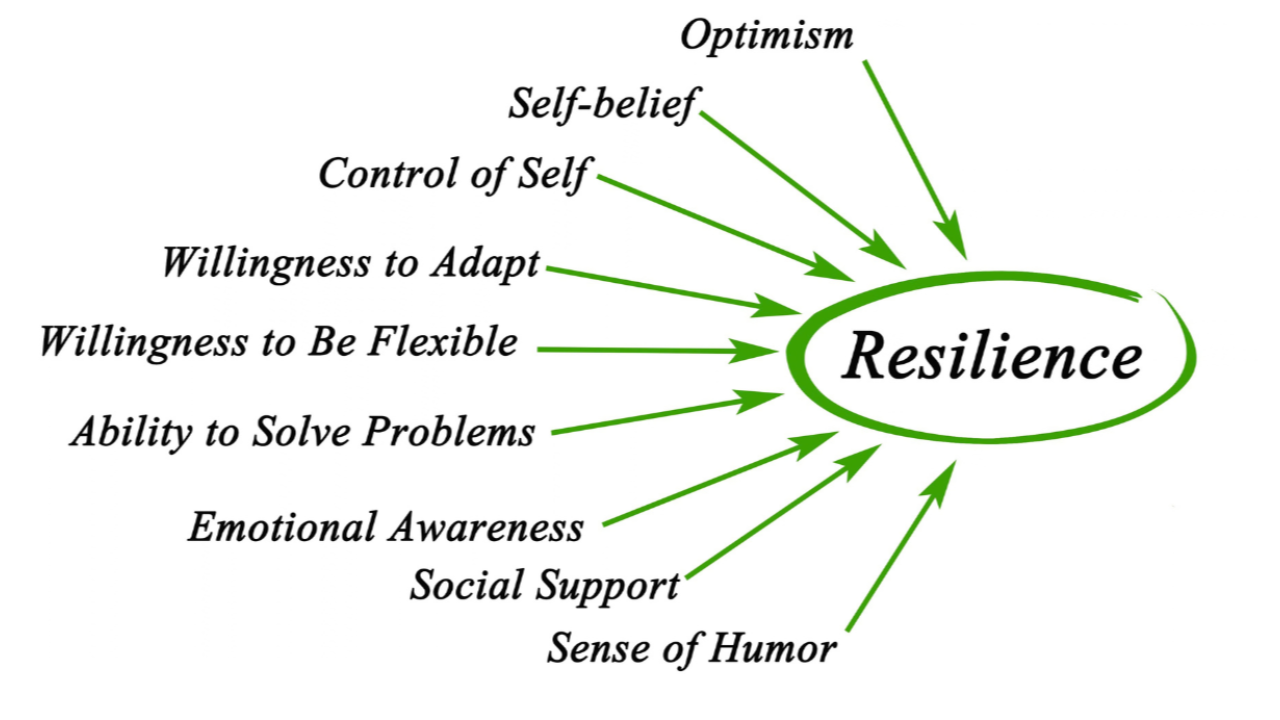
Resilience. I have written about it before (Reslience). However, new evidence continues to emerge about its importance in higher education. The effects of stress on cognitive function and learning is well documented. The demanding schedule, content volume, and time frame of PA education make it difficult for students and faculty to make stress management and wellness practices a priority, one as important as learning the signs and symptoms of a heart attack. Some suggest that self-care and its practical application should be treated as a required professional competence (Jian et al., 2025).
But before I go any further, I want to give a shout-out to the author of the article, Lee Lipton, who motivated me to share this information because she is a PA! I will provide a brief overview of what she presented and encourage you to read her full article (see references).
More educational institutions are moving toward incorporating self-regulation and stress management strategies into their curricula to promote resilience and prevent future professional burnout (Hsu & Goldsmith, 2021; Egan et al., 2022; Zhang et al., 2025). Evidence-based regulation strategies and simple self-regulation practices could help mitigate the effects of the high-stakes, high-stress environment of graduate education (Chongjin et al., 2025; Emerson et al., 2023).
Lipton offered a few suggestions to help students build resilience.
Embracing errors and normalizing uncertainty
One of my mottos has always been that mistakes are opportunities to learn, and there is no such thing as perfect. We grow by making mistakes. Having the entire faculty on board with this approach can help students reframe mistakes from a self-deprecating attack to a positive part of the learning process.
As I am sure you know, students often focus on getting the right answer quickly. Another unfortunate habit that is hard to break. Yet, medicine is uncertain and so is life. To help students normalize uncertainty, have them pause when emotions or fear arise, take a breath, and remind themselves that they can figure it out. Encouraging students to find an answer or at least an initial course of action when they feel unsure can be extremely helpful in building both confidence and resilience (Ng, 2018). Case-based learning can really help with this.
Model Vulnerability
I can personally attest to the benefits of this, having taught ethics for years and, as a clinician, finding myself in situations I didn't always navigate well in my early career. As faculty, we are role models, and that is a powerful place to be because it can and does have an impact on students. When they hear us share an experience where we weren't our best and how we handled it or learned from it, it speaks volumes and reminds students that we are all human. We all do things that aren't our best, but the key is to acknowledge it, reflect on it, learn from it, and, when needed, take corrective action. I have found that sometimes students remember the story, which then helps them remember the principle behind it.
Teach about neuroplasticity, effective study techniques, and grounding techniques
Helping students understand how the brain works in relation to learning gives them information they can use to help them learn better (The Brain and Learning). This also applies to teaching effective, evidence-based study skills and encouraging students to integrate at least some of them (Study Skills). And, as Lipton includes in her article, grounding techniques. These include regulated breathing, such as Box Breathing, mindful breathing, or learning how to do a Body Scan, which is part of Mindfulness-Based Stress Reduction.
One thing I used to do before an exam, once everyone was in their seat before the test started, was to have us all sit and breathe together. It was part of how I encouraged students to use their breath to calm their thoughts and their bodies, having already taught them how decreasing stress helps keep their frontal cortex online.
Self-reflection
Self-reflection here means engaging students in a process where they think about, review, and analyze their own learning process, such as what seems to work, what doesn't, and how well they understand the concepts or material, and then use that information to make future adjustments (Lipton, 2026). Strong evidence shows that self-reflection deepens conceptual understanding, strengthens problem-solving skills, promotes engagement in learning, and boosts confidence (Zhai et al., 2023). One of the easiest and most effective ways to incorporate this is to assign students self-reflective journals. Helpful prompts can be beneficial. Another way is to include self-reflective assignments throughout the course. The key is to have students reflect on their learning and thinking processes, and what trips them up, to help them understand themselves better as learners. If this sounds like metacognition, yes – that is part of what we are talking about here.
Intentionally including self-reflection and stress-management skills in a course and a program's overall curriculum can help students build the resilience they need to succeed and ward off professional burnout (Zhang et al., 2025).
Disclaimer: Generative AI was not used to draft or write any portion of this article. This piece was written by me and reflects my professional analysis, judgment, thoughts, and opinions.
References
Chongjin, W., Charan, I. A., and Soomro, S. (2025). Examining the effects of academic stress, self-efficacy, cognitive-behavioral outcomes, psychological distress, and prosocial behavior: A moderated-mediation model. Brain and Behavior 15(10): e70907. https://doi.org/10.1002/brb3.70907
Egan, H., O'Hara, M., Cook, A., and Mantzios, M. (2022). Mindfulness, self-compassion, resiliency and wellbeing in higher education: A recipe to increase academic performance. Journal of Further and Higher Education 46(3): 301–11.
Emerson, D J., Hair Jr, J. F, and Smith, K. J. (2023). Psychological distress, burnout, and business student turnover: The role of resilience as a coping mechanism. Research in Higher Education 64(2): 228–59. https://doi.org/10.1007/s11162-022-09704-9
Hsu, J. L., and Goldsmith, G. R. (2021, February 26). Instructor strategies to alleviate stress and anxiety among college and university STEM students. CBE – Life Sciences Education 20(1). https://doi.org/10.1187/cbe.20-08-0189
Jian, M., Mccusker, P., Mitchell, M., Roesch-Marsh, A., Rose, S., and Petrova, L. (2025). Social Workers' views and experiences of self-care practices: A qualitative interview study. Frontiers in Public Health, 13: 1585900. https://doi.org/10.3389/fpubh.2025.1585900
Lipton, L. (2026, September 14). Cultivating student resilience: Practical strategies for well-being. Faculty Focus. https://www.facultyfocus.com/articles/effective-teaching-strategies/cultivating-student-resilience-practical-strategies-for-well-being
Ng, B. (2018). The neuroscience of growth mindset and intrinsic motivation. Brain Sciences 8 (2): 20.
Zhai, N., Huang, Y., Ma, X., and Chen, J. (2023, September). Can reflective interventions improve students' academic achievement? A meta-analysis. Thinking Skills and Creativity, 49. https://doi.org/10.1016/j.tsc.2023.101373
Zhang J, Meng J and Wen X (2025) The relationship between stress and academic burnout in college students: evidence from longitudinal data on indirect effects. Front. Psychol. 16:1517920. doi: 10.3389/fpsyg.2025.1517920
EXCITING NEWS!
My book,
Becoming a PA Educator
is now available for purchase!
Sign up for The PA Educator
A monthly blog providing current, practical, and evidence-based articles, teaching tips, information about online faculty development courses, resources, and more for and about those who teach in PA education.

Emily WhiteHorse Ph.D., PA-C Emeritus
With almost 40 years in education and over 25 years providing faculty development nationally and in PA programs across the country, I seek to inspire, empower, and support new and experienced faculty as they transition from clinician to educator.